

Long flights can feel like a test of patience, comfort, and endurance. Sitting in one place for hours, dealing with dry air, and trying to rest in a cramped space can leave you feeling exhausted before you even arrive. A little preparation can make a big difference in how the journey feels. Comfort during a long flight isn’t just about the seat. It’s about creating a routine and environment that helps your body relax and pass the time more easily.
Choose the Right Seat for Your Needs
Where you sit plays a major role in how comfortable a long flight feels. Aisle seats give you the freedom to stand up, stretch, and move around without needing to ask others to get up. Window seats offer a surface to lean against, which can make resting or sleeping easier. Middle seats tend to feel the most restrictive, especially over long periods.
Some travelers prefer bulkhead or exit row seats for extra legroom, though those options can come with trade-offs like limited storage or reduced recline. Thinking about your priorities, whether it’s space, access, or the ability to rest, can help you choose a seat that makes the flight feel more comfortable from start to finish.
Wear Comfortable, Flexible Clothing
Clothing can make a noticeable difference during long flights. Tight or restrictive outfits can lead to discomfort after sitting for hours, while loose, breathable fabrics allow your body to move and adjust more easily. Choosing soft materials helps prevent irritation and makes it easier to relax.
Layering is especially helpful because cabin temperatures can shift throughout the flight. A lightweight sweater or scarf can keep you warm and double as a pillow or blanket if needed. Comfortable shoes that are easy to remove also help, especially since feet can swell slightly during flights, making tight footwear uncomfortable over time.
Bring Essentials That Support Rest
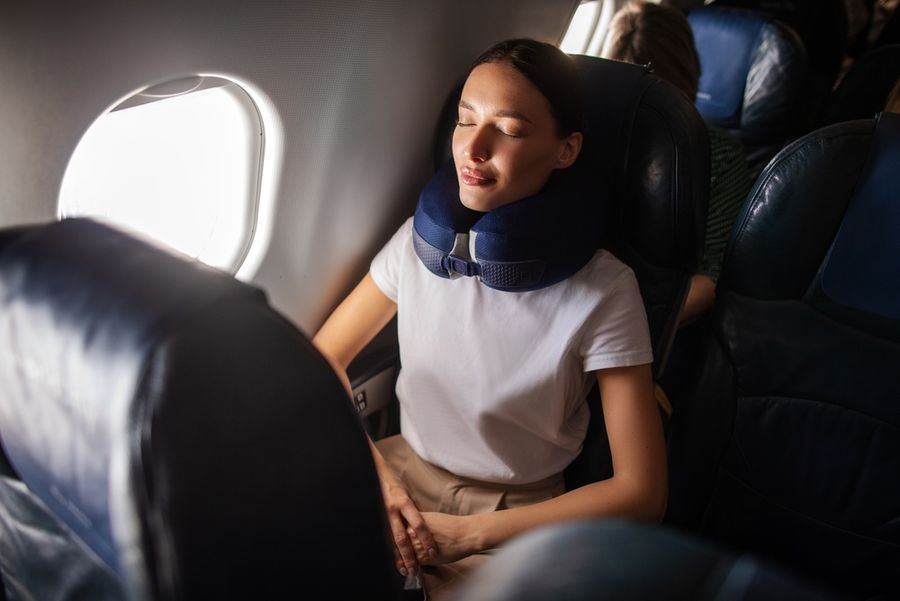
Resting on a plane can be difficult, but having the right items can make it much easier. A supportive travel pillow helps keep your neck aligned, while an eye mask blocks out changing light in the cabin. Earplugs or noise-canceling headphones can reduce distractions and create a calmer environment.
Packing a small comfort kit can also help you feel more refreshed during the flight. Items like lip balm, moisturizer, and a toothbrush can make a big difference on longer journeys. Creating a familiar and comfortable setup, even in a small space, can make it easier to relax and get some meaningful rest while traveling.
Stay Hydrated and Eat Smart
Staying hydrated is essential during long flights because cabin air tends to be very dry. Drinking water regularly helps prevent fatigue, headaches, and that sluggish feeling that often comes with travel. Bringing a reusable water bottle makes it easier to keep sipping throughout the journey.
Food choices also play a role in comfort. Bringing light, balanced snacks can help you avoid relying solely on in-flight meals. Options like nuts, fruit, or protein bars provide steady energy without making you feel overly full. Limiting alcohol and caffeine can also help maintain hydration and support better rest during the flight.
Keep Your Body Moving During the Flight
Sitting for long stretches can lead to stiffness, soreness, and reduced circulation. Getting up every couple of hours to walk the aisle can help your body stay more comfortable and prevent that cramped feeling from setting in.
Even while seated, small movements can make a difference. Stretching your legs, rotating your ankles, or shifting your position can help improve circulation and reduce tension. Staying active in simple ways helps your body feel better during the flight and can make the transition after landing much smoother and less physically draining.
Plan Ways to Pass the Time Comfortably
Long flights can feel endless without something to focus on. Planning a few activities in advance can help the time pass more quickly and make the experience more enjoyable. Downloading movies, bringing a book, or listening to music can create a sense of routine during the flight.
Breaking your time into small segments can also help. Watching a movie, then reading, then resting, gives your mind variety and keeps you from constantly checking the clock. Having a simple plan for how you’ll spend your time can make the journey feel more structured and far less tiring overall.
Turning Hours in the Air Into a More Relaxed Journey
Comfort on a long flight comes from a combination of thoughtful choices rather than one single solution. From selecting the right seat to wearing comfortable clothing and staying hydrated, each step contributes to a better experience.
With a little preparation, long flights can feel far less overwhelming. When your body is supported and your time is planned, the journey feels smoother and more manageable. Instead of focusing on discomfort, you can settle into the rhythm of travel and arrive feeling more rested and ready for what comes next.